Two ovens, two completely different jobs
The ovens
A pizza is mostly decided by the floor it is baked on. We have two floors, because the pizzas on this menu want opposite things from them.
Why a pizza is really about its floor
Almost everything that distinguishes one style of pizza from another comes down to how much heat goes into the base in the first thirty seconds. A hot floor sets the crust before the moisture in the dough can escape, so the inside stays soft and the rim inflates. A cooler floor dries the base slowly, which makes it crisp all the way through.
Neither of those is better. They make different pizzas, and both of those pizzas are on this menu, which is why there are two ovens in a shop this size.
The deck ovens
- Floor
- Steel
- Temperature
- 550–600°F
- Bake
- 9–20 min
- Pizzas
- NY, square, bar
Two stacked gas decks with steel floors, and everything except the Italian pies goes through them: the New York rounds at 600°F, the Sicilian and grandma trays at 550°F, the bar pies watched closely for their last ninety seconds, and the baked pasta and wings on the shelf above.
The back of a deck oven is always hotter than the front, which is why every pizza is turned once at the halfway point. Anybody who tells you their oven is perfectly even has not spent much time in front of one.
The coal-fired brick oven
- Floor
- Brick
- Temperature
- 850–900°F
- Bake
- 90 seconds
- Pizzas
- The Italian side
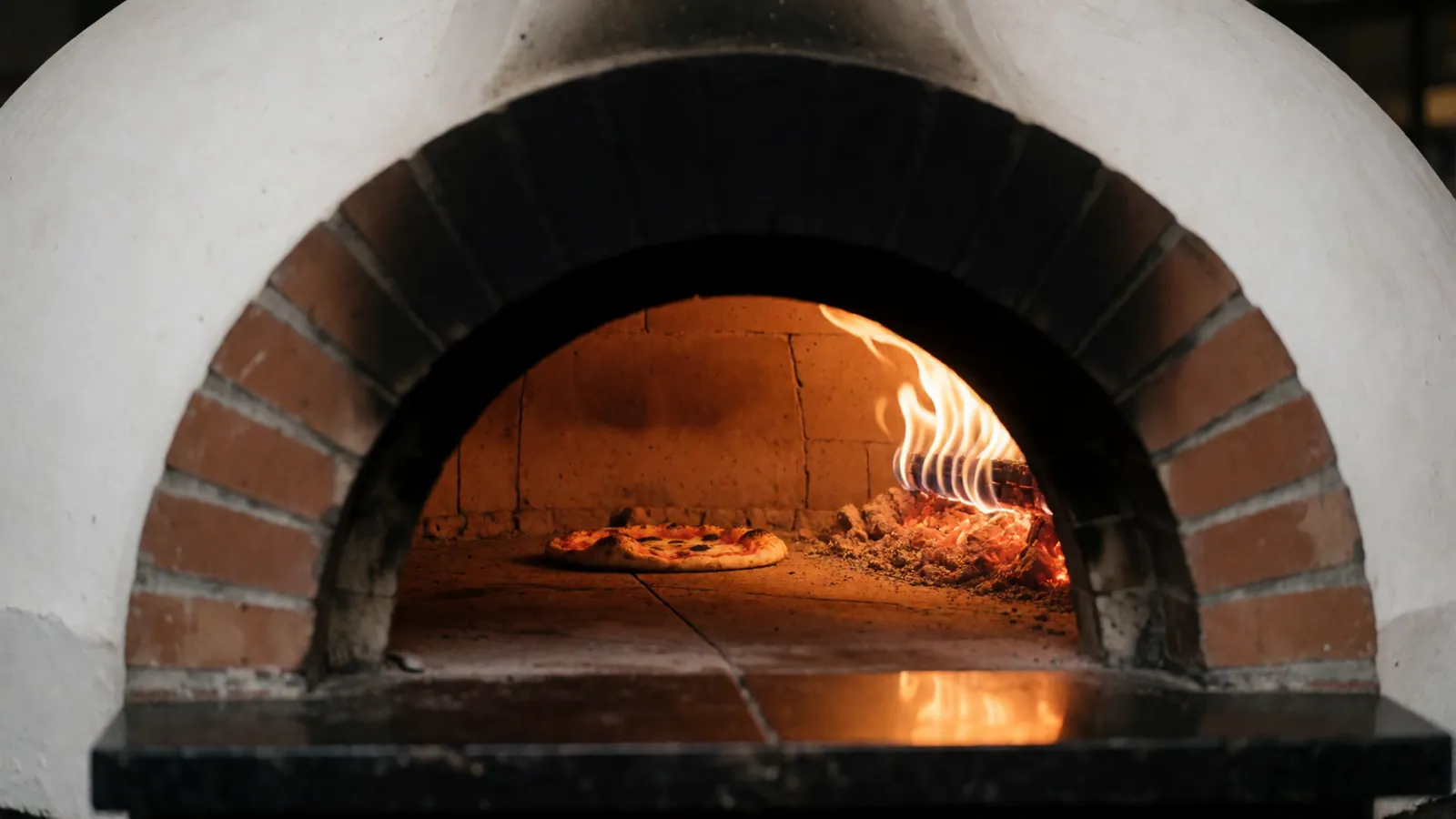
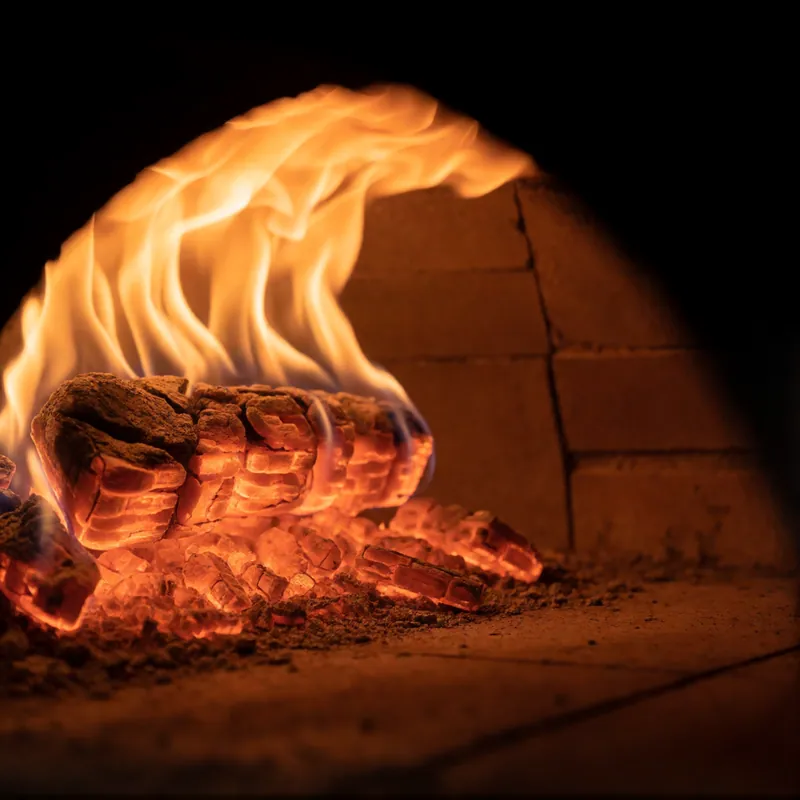
A domed brick oven burning anthracite coal with split oak added for flame, banked overnight rather than let out. Coal is what the old New York pizza ovens burned and it holds a far steadier floor than wood alone, which matters enormously when a pizza is only in there for ninety seconds.
Marco keeps it. That is a real job: reading the ember bed, moving the fire, knowing that the floor drops forty degrees after four pizzas in a row and letting it recover rather than sending out a pale one.
A pizza, from peel to plate
Ninety seconds, watched
Launched
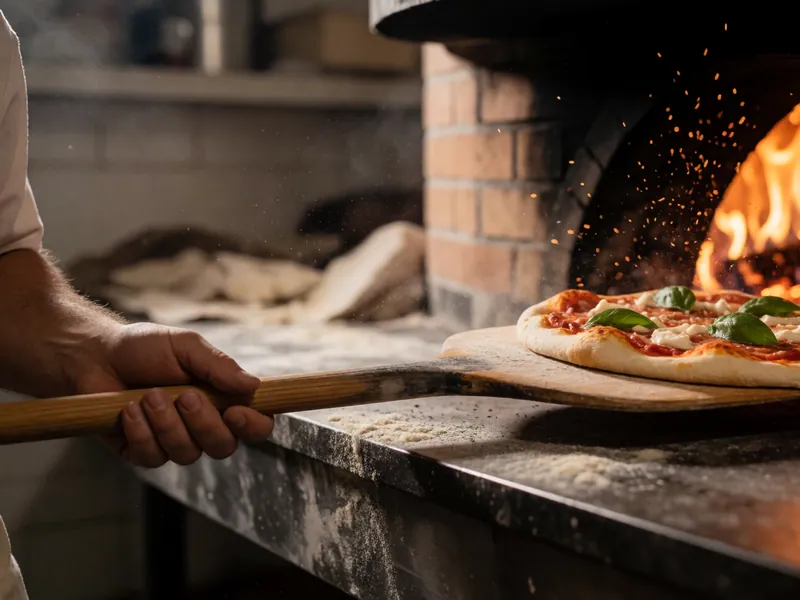
Off the peel with one movement. Hesitate and the dough sticks and folds itself in half on the floor.
Turned twice
With a small steel peel, so the side facing the fire changes before it goes past brown into black.
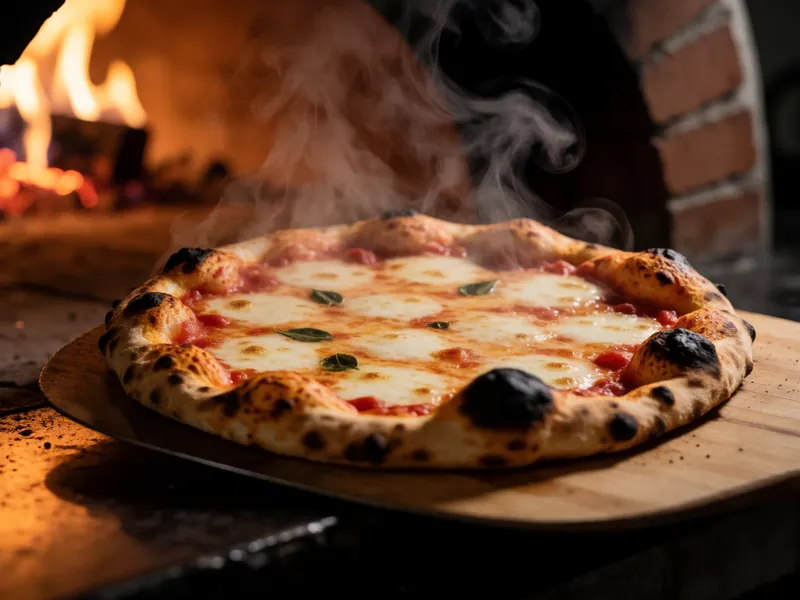
Pulled
At about ninety seconds. Four seconds too long is a burnt pizza rather than a well-done one.
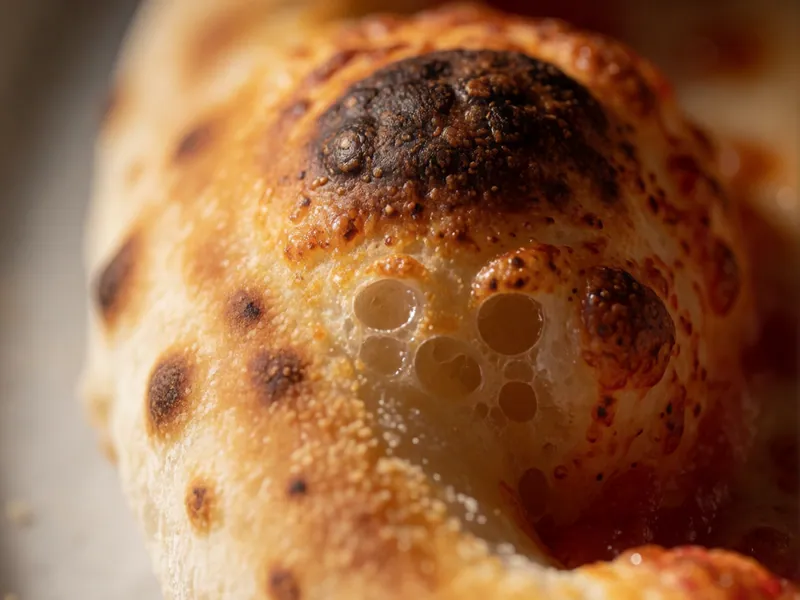
Spotted, not burnt
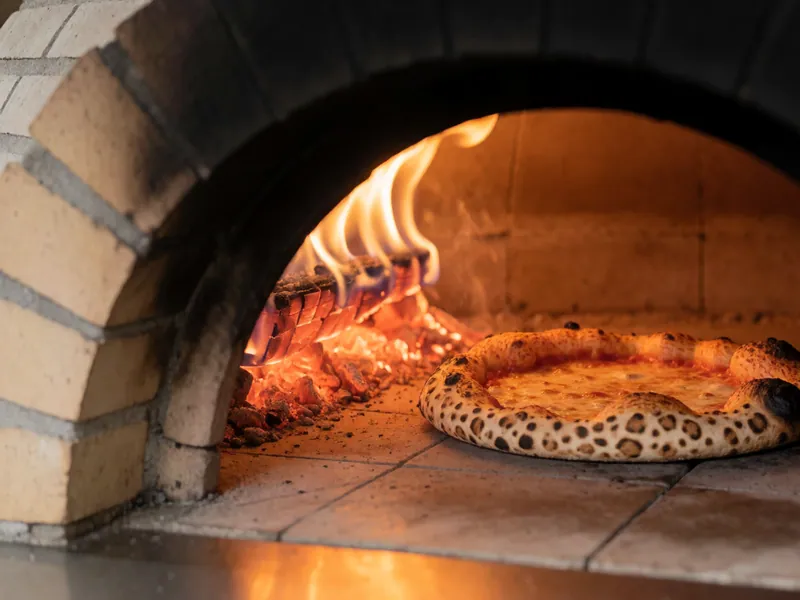
The black on the rim is in spots, not patches. Sugar caramelising in seconds, which is what a 900°F floor does.
Asked at the counter
Questions about the ovens
Why do you need two ovens?
Because a New York pizza and a Neapolitan pizza want completely different things. One needs twelve minutes at 600°F on steel; the other needs ninety seconds at 900°F on brick. No single oven does both, and a shop that tries produces two mediocre pizzas instead of one good one.
Is the brick oven wood-fired or coal-fired?
Coal, with oak added for the flame. Coal holds a far steadier floor temperature than wood alone, which is the New York tradition and the reason the old coal-oven shops in this city taste the way they do.
Does the oven ever go out?
The coal oven is banked overnight rather than extinguished and brought back up in the morning. Letting it go out completely means most of a day to bring the brick back to temperature.
Can I sit near the oven?
Yes, and the two counter seats nearest it are the best in the shop. They are also the last to be free, for the same reason.
Why is my pizza darker on one side?
Because the side nearer the fire is hotter, and a pizza is turned rather than left still. A little unevenness is what a real fire does; a uniformly baked pizza is what a conveyor produces.
Is the wood-fired flavour a real thing?
The smoke contributes something, though less than people think at ninety seconds. Most of what you taste as wood-fired is really the effect of a very hot floor: rapid oven spring, a blistered rim and a base that sets before it can dry out.
A shared flour kitchen, and what that rules out. Our kitchen handles wheat flour in open air all day, along with milk, eggs, soy, tree nuts and fish. Flour becomes airborne every time a dough ball is opened, and it settles on every surface in the room, including the peels, the oven floor, the cutting board and the wheel. We can tell you what we put on a pizza, and we will tell you honestly. We cannot tell you that anything leaving this kitchen is free of an allergen, and we will not say it. If a reaction would send you to hospital, this is not a safe kitchen for you, and we would far rather say so than take the order.
Twelve to fifteen minutes, and worth the wait
Order a pie
Telephone the shop and we will tell you honestly how long the kitchen is running before you commit to anything. Collection is always quicker than delivery and the pizza is always better for it. If you are ordering for a crowd, the catering page has the trays and the notice we need.