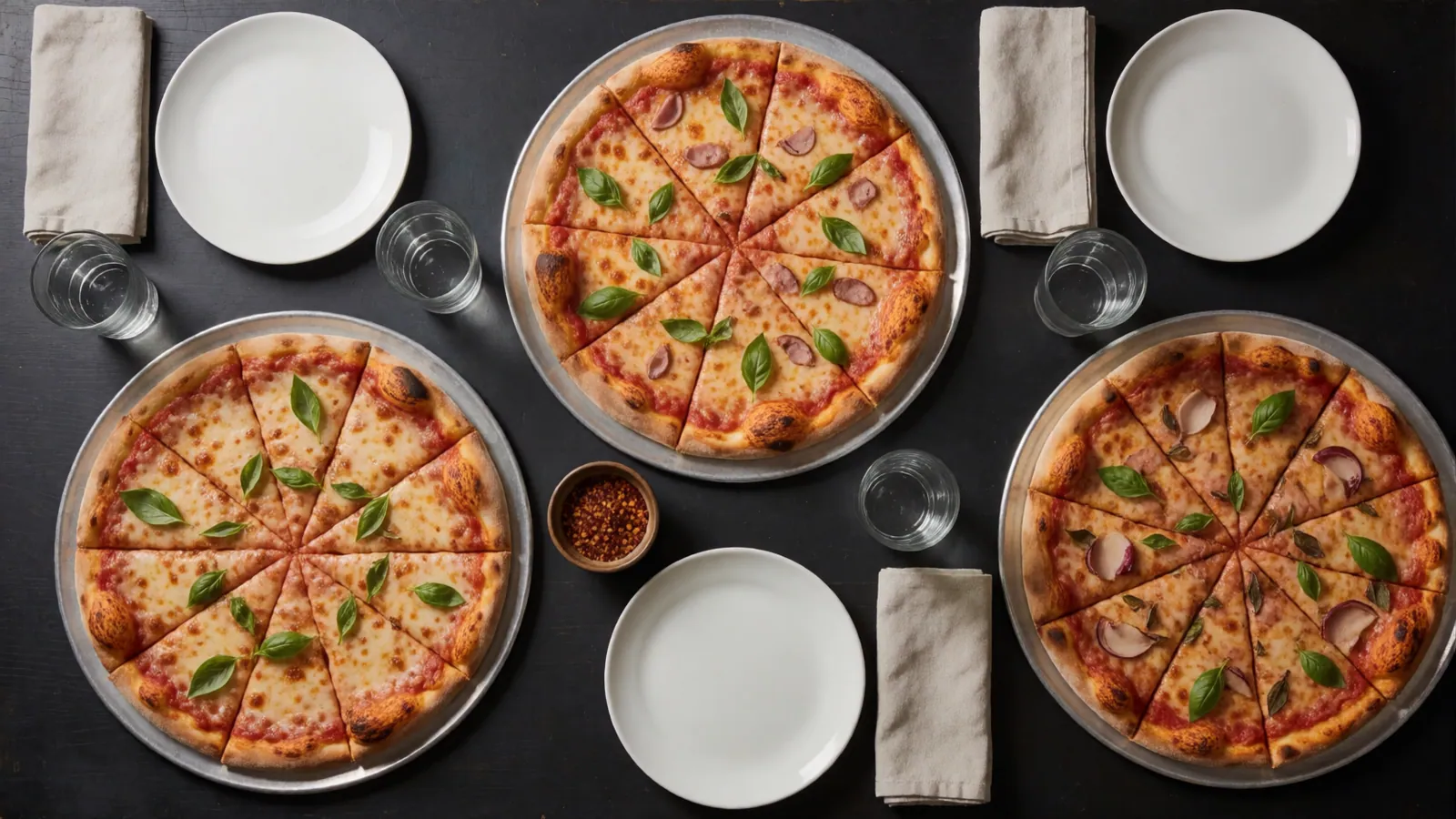
Six styles, and they are genuinely different pizzas
Which style is which
Not marketing names for the same dough. Six different hydrations, three different ovens and bake times from ninety seconds to twenty minutes.
People ask at the counter every day what the difference is between a Sicilian and a grandma, or why the little Italian pizza costs nearly as much as the big one. The answers are not marketing — they come out of the dough and the oven, and once you know them the menu makes considerably more sense.
Style 1 of 6
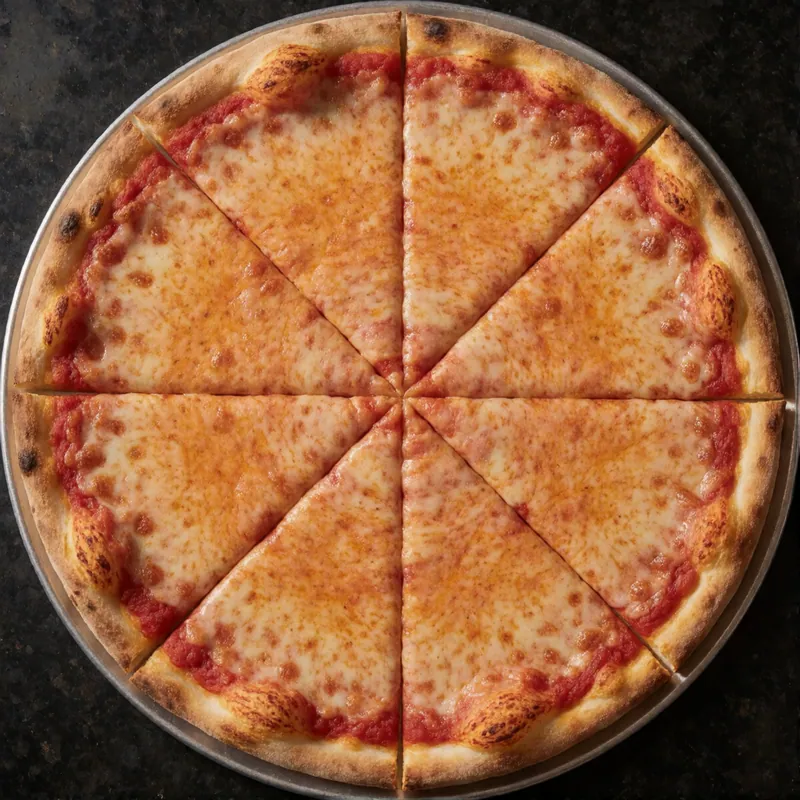
New York
- Hydration
- 62%
- Ferment
- 48 hours, cold
- Oven
- Deck, 600°F
- Bake
- 12–14 minutes
A large thin round baked on a steel deck. The base is dry enough to hold a slice horizontally for a second and pliable enough to fold, which is the whole design: it is a pizza engineered to be eaten standing up.
Style 2 of 6
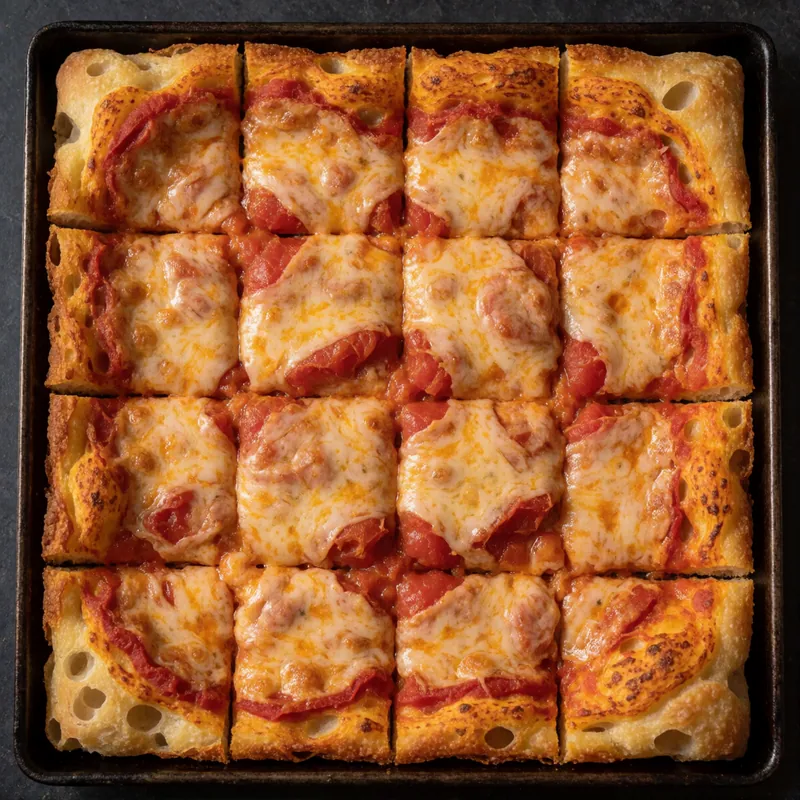
Sicilian
- Hydration
- 72%
- Ferment
- 24 hours in the pan
- Oven
- Deck, 550°F
- Bake
- 18–20 minutes
A thick square proofed in an oiled steel pan so the base fries as it bakes. The crumb should be open and light rather than bready — the difference between a good Sicilian and a bad one is entirely in how long it was left to rise in the pan.
Style 3 of 6
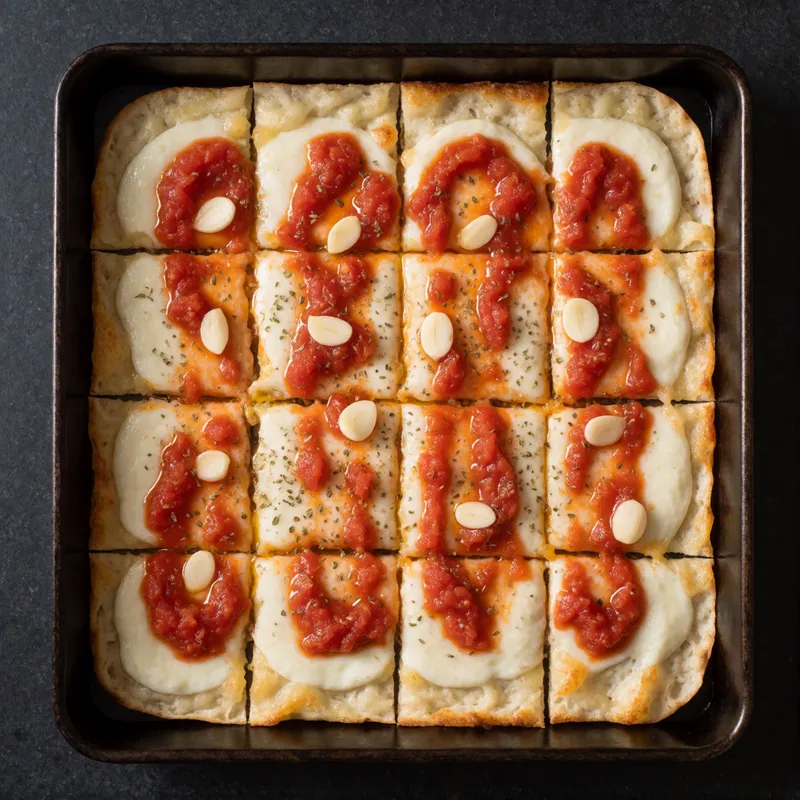
Grandma
- Hydration
- 65%
- Ferment
- 6 hours in the pan
- Oven
- Deck, 550°F
- Bake
- 14–16 minutes
Thin and square, pressed straight into the pan with no long proof, cheese down first and tomato spooned over in stripes. A Long Island home-kitchen pizza that came into the shops, and it is not a thin Sicilian however often it is called one.
Style 4 of 6
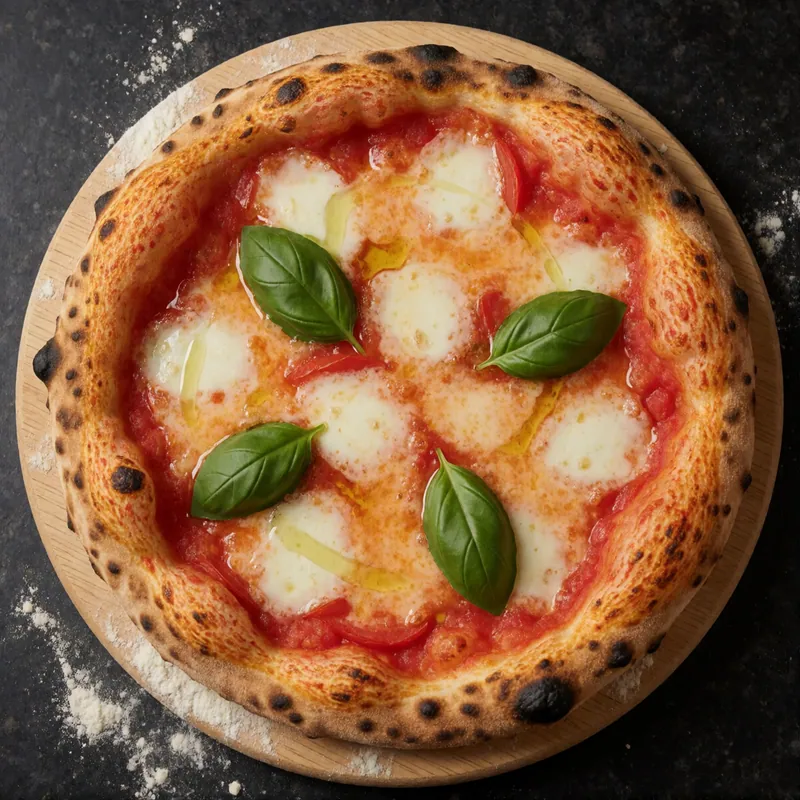
Neapolitan
- Hydration
- 60%
- Ferment
- 24 hours, room and cold
- Oven
- Coal-fired brick, 900°F
- Bake
- 90 seconds
A small, soft, fast pizza. Ninety seconds on a 900°F floor puffs the rim and blisters it black in spots, and leaves the centre deliberately wet. It is meant to be eaten with a knife and fork, at the table, immediately — it does not travel and we do not pretend it does.
Style 5 of 6
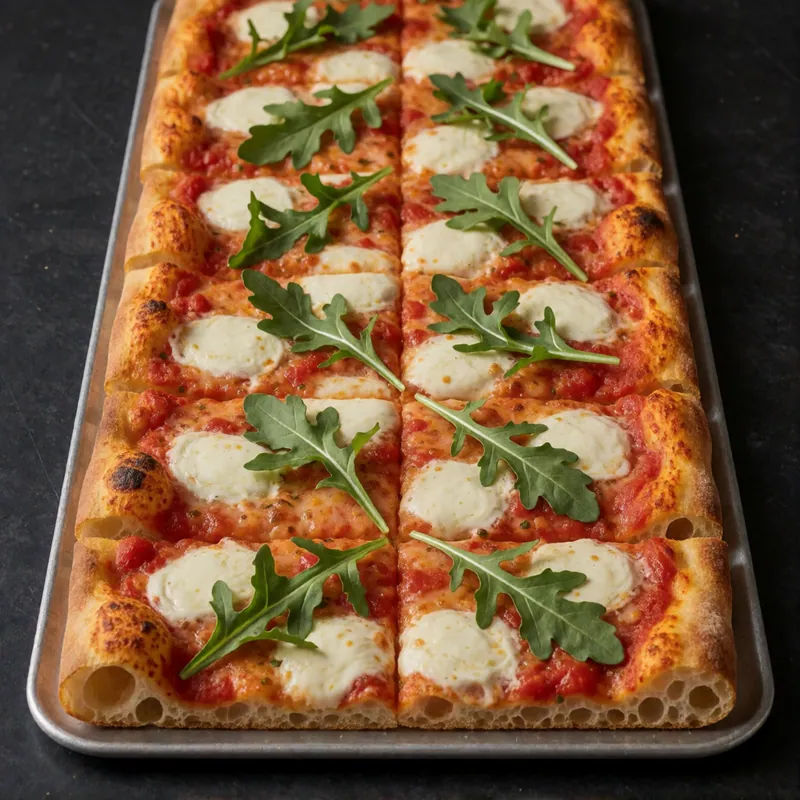
Roman al taglio
- Hydration
- 80%
- Ferment
- 48 hours, cold
- Oven
- Deck, 575°F
- Bake
- Twice — base, then topped
A very wet dough proofed two days and baked in long trays, cut with scissors and sold by weight. The crumb is a honeycomb and the base is crisp, which are difficult to get at the same time and are the entire point.
Style 6 of 6
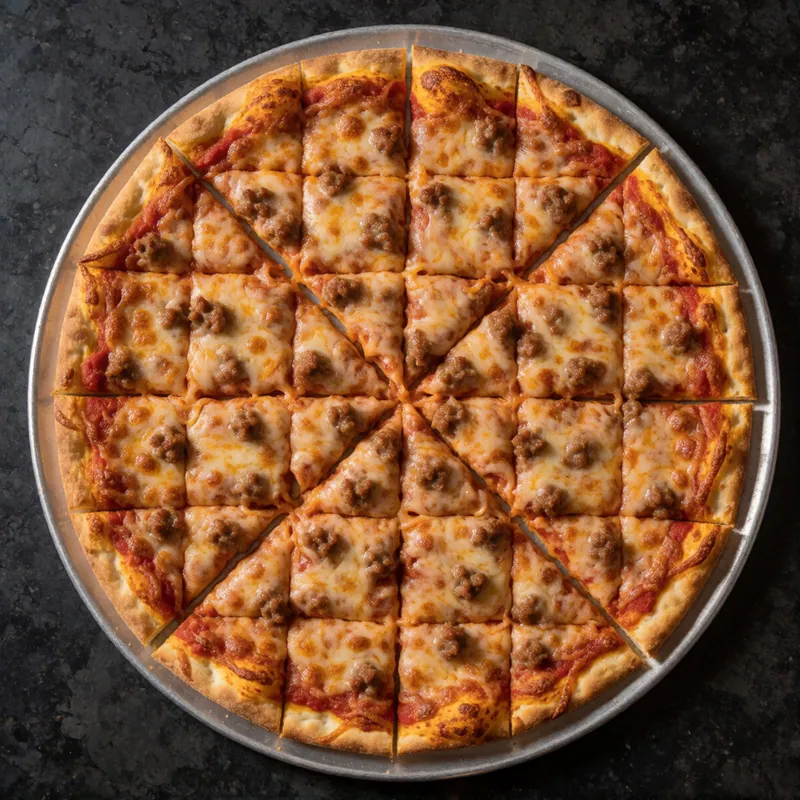
Bar pie
- Hydration
- 55%
- Ferment
- 24 hours, cold
- Oven
- Deck, 600°F
- Bake
- 9–10 minutes
A small, rolled, cracker-thin pizza with cheese to the very edge, cut into squares. A New Jersey and Connecticut tavern tradition rather than a New York one, and the crispest thing we make.
All six at once
The comparison table
| Style | Hydration | Ferment | Oven | Bake |
|---|---|---|---|---|
| New York | 62% | 48 hours, cold | Deck, 600°F | 12–14 minutes |
| Sicilian | 72% | 24 hours in the pan | Deck, 550°F | 18–20 minutes |
| Grandma | 65% | 6 hours in the pan | Deck, 550°F | 14–16 minutes |
| Neapolitan | 60% | 24 hours, room and cold | Coal-fired brick, 900°F | 90 seconds |
| Roman al taglio | 80% | 48 hours, cold | Deck, 575°F | Twice — base, then topped |
| Bar pie | 55% | 24 hours, cold | Deck, 600°F | 9–10 minutes |
Asked at the counter
Questions about the styles
What is the difference between Sicilian and grandma pizza?
The dough and the proof. A Sicilian is a wetter dough left in the pan for a full day, so it is thick with an open crumb. A grandma is a drier dough pressed in and rested an afternoon, so it is thin and crisp. They only resemble each other from directly above.
Which style is the classic New York slice?
The large thin round we simply call the cheese pizza — 18 inches, cut in eight, thin enough to fold. Everything else on this menu is either a square, a small Italian pie or a tray.
Why is the Neapolitan pizza so much smaller?
Because it bakes in ninety seconds at 900°F and a larger one would burn at the rim before the middle set. The size follows from the oven rather than from the price.
Which travels best?
The square pies, and the upside-down Sicilian best of all. The Neapolitan travels worst by a wide margin — it is very good for about ten minutes and ordinary after twenty.
What does hydration mean on this page?
The weight of water as a percentage of the weight of flour. Sixty per cent is a firm, workable dough; eighty per cent is barely handleable and has to be folded rather than kneaded. It is the single number that most determines what a finished crust is like.
Which should I order if I have never been here?
A plain cheese slice. It is $3.75, it takes two minutes, and it will tell you more about whether you want to come back than anything else on the menu.
Twelve to fifteen minutes, and worth the wait
Order a pie
Telephone the shop and we will tell you honestly how long the kitchen is running before you commit to anything. Collection is always quicker than delivery and the pizza is always better for it. If you are ordering for a crowd, the catering page has the trays and the notice we need.