The most important page on this website
Allergens and cross-contact
We can tell you what is on your pizza. We cannot tell you that anything leaving this kitchen is free of an allergen, and we are not going to pretend we can.
Why this page reads the way it does
Almost every pizzeria website has an allergen page and almost all of them are written by a lawyer to say as little as possible while sounding reassuring. This one is written to be useful, which means it has to start by telling you what we cannot do.
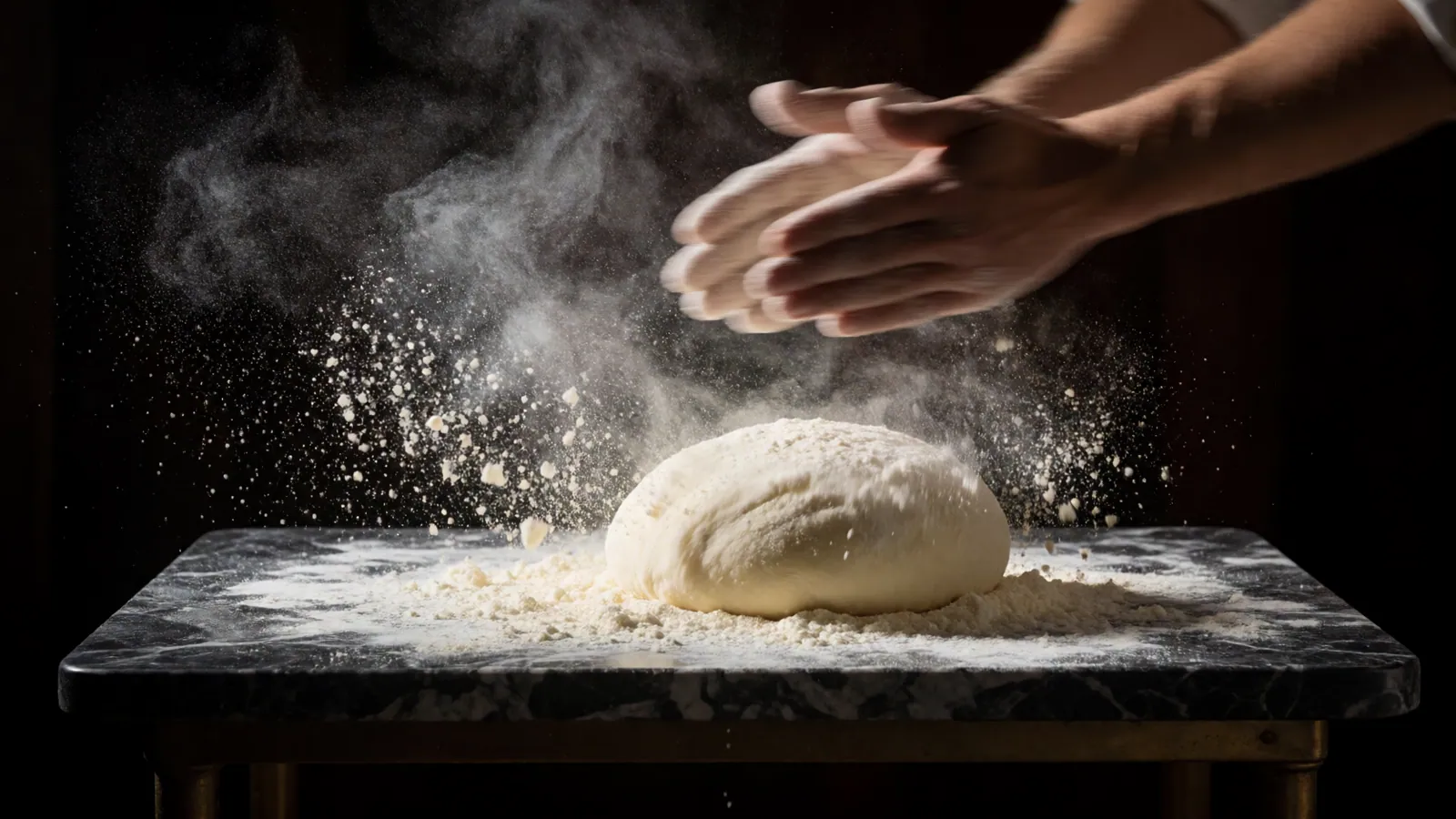
Our kitchen handles wheat flour in open air all day, along with milk, eggs, soy, tree nuts and fish. Flour becomes airborne every time a dough ball is opened, and it settles on every surface in the room, including the peels, the oven floor, the cutting board and the wheel. We can tell you what we put on a pizza, and we will tell you honestly. We cannot tell you that anything leaving this kitchen is free of an allergen, and we will not say it. If a reaction would send you to hospital, this is not a safe kitchen for you, and we would far rather say so than take the order.
Flour is the difficult one and it is worth understanding why. A bag of flour opened at speed puts a fine dust into the air that stays there for a long time and settles on everything — not just the bench it was opened on. By eight in the morning there is wheat protein on the peels, on the oven floor, on the cutting board and on the wheel. No amount of wiping between orders changes that, because it is not a surface problem, it is an air problem.
So when a shop tells you its gluten-free pizza is safe for coeliac disease and it has one room, one oven and one cutter, that shop is either not thinking about it or is choosing not to. We would rather lose the order.
Every allergen, and what we can honestly say
What is in this kitchen
The middle column is the one most sites leave out. It is not about whether a dish contains an allergen — it is about whether the allergen is in the room, which for a shared kitchen is the question that actually matters.
| Allergen | In this kitchen | Where it turns up |
|---|---|---|
| Cereals containing gluten | In the building constantly | Wheat flour is the main ingredient of this shop. It is airborne all day. Also in the hero rolls, the pasta, the breadcrumb on the rice balls and the zeppole. |
| Milk | In the building constantly | Mozzarella, ricotta, provolone, hard grating cheese, butter in the wing sauces, cream in the vodka sauce. On almost every surface. |
| Eggs | Daily | Egg wash on every roll, stromboli and calzone crust. Egg in the crumb coating of the rice balls. |
| Soya | Daily | In the plant-based cheese and in some of the cured meats. |
| Tree nuts | Daily | Pistachio in the cannoli filling and on the ends. Pine nuts in seasonal pizzas. Handled on the shared bench. |
| Peanuts | Not used | We do not use peanuts or peanut oil in anything. We cannot speak for what a supplier's own facility handles. |
| Fish | Daily | Anchovy as a pizza topping, and in the chopped salad dressing when it is asked for. |
| Crustaceans and molluscs | Not used | Nothing on this menu contains them. |
| Celery | Daily | Raw celery with the wings. Celery in the meat ragù. |
| Mustard | Occasionally | In some cured meats and in one of the salad dressings. |
| Sesame | Daily | On the pepperoni roll, the stromboli and the hero rolls. Sesame seeds travel; treat the bench as a sesame bench. |
| Sulphites | Occasionally | In some cured meats and in the vinegar used in the dressings. |
| Lupin | Not used | Not an ingredient in anything we make. |
| Sesame-free, nut-free or dairy-free claims | We do not make them | There is no dish on this menu we are able to describe as free of any allergen, because there is no part of this kitchen that is separated from the rest of it. |
“Not used” means we do not use it as an ingredient in anything on the menu. It does not mean the food is free of it, because we cannot control what a supplier’s own facility handles, and we are not going to imply otherwise.
What we will do
- Tell you every ingredient in any dish, at the counter or on the telephone, for as long as it takes.
- Use a wiped board and fresh gloves when you tell us it matters, and say out loud what we are putting on it.
- Tell you when we are not sure about something rather than guess at it.
- Tell you honestly that this is not a safe kitchen for you, if that is the truth.
What we will not do
- Describe any dish as gluten-free, nut-free, dairy-free or free of anything else.
- Claim a separate preparation area, oven or fryer. There is not one.
- Tell you a procedure makes food safe when it only makes contact less likely.
- Take an order from somebody whose reaction would be serious, however much they insist.
Neither halal nor kosher, and one wheel cuts everything. We are not a halal kitchen and we are not a kosher kitchen; we hold no certification for either and we will not imply one. Our vegetarian pizzas are made on the same benches and cut with the same wheel as the meat ones. Our dairy-free pizzas share an oven floor with cheese.
Asked, and answered plainly
Allergen questions
Can I eat here if I have coeliac disease?
No, and we are sorry to be so blunt about it. We open sacks of wheat flour in this room from six in the morning; it goes airborne and settles on every surface, and our gluten-free base is baked on the same oven floor and cut with the same wheel as wheat pizza. There is no procedure we can follow in a single-room shop that makes that safe.
Then why do you sell a gluten-free crust at all?
Because a great many people avoid wheat by choice or manage a sensitivity where trace contact is not a problem, and for them it is a good pizza. That is the customer it is on the menu for, and we say so on its own page rather than leaving you to work it out.
What can you actually tell me about an allergen?
What we put on the pizza. We know every ingredient in every dish and we will go through it with you at the counter or on the telephone for as long as you need. What we cannot tell you is what has been in the air, on the bench or on the wheel.
Do you have a separate fryer, oven or preparation area?
No. One deck oven, one coal oven, one bench, one cutting wheel and one small pan for the rice balls and zeppole. A shop that does have separate equipment is a different proposition and you should prefer it if you need it.
Are there nuts in the kitchen?
Yes. Pistachio is in the cannoli filling and is handled on the same bench as everything else. Pine nuts come and go with the seasonal pizzas. Treat the whole kitchen as a kitchen that handles tree nuts.
What about fish?
Anchovy is a topping and is kept on the cold table with the other toppings. Anchovy is also in the chopped salad dressing on request only, and we will always tell you if it is in something.
Can I telephone ahead and have you prepare something carefully?
You can telephone ahead and we will take real care — a wiped board, fresh gloves, ingredients checked aloud. That reduces contact. It does not make the food free of an allergen and we are not going to describe it as though it does.
Ask before you order, not after
Telephone and ask
If an allergen matters to you, telephone rather than ordering online through anybody. We will go through a dish ingredient by ingredient, we will tell you what we are unsure about, and if the honest answer is that you should eat somewhere else, we will say that too.