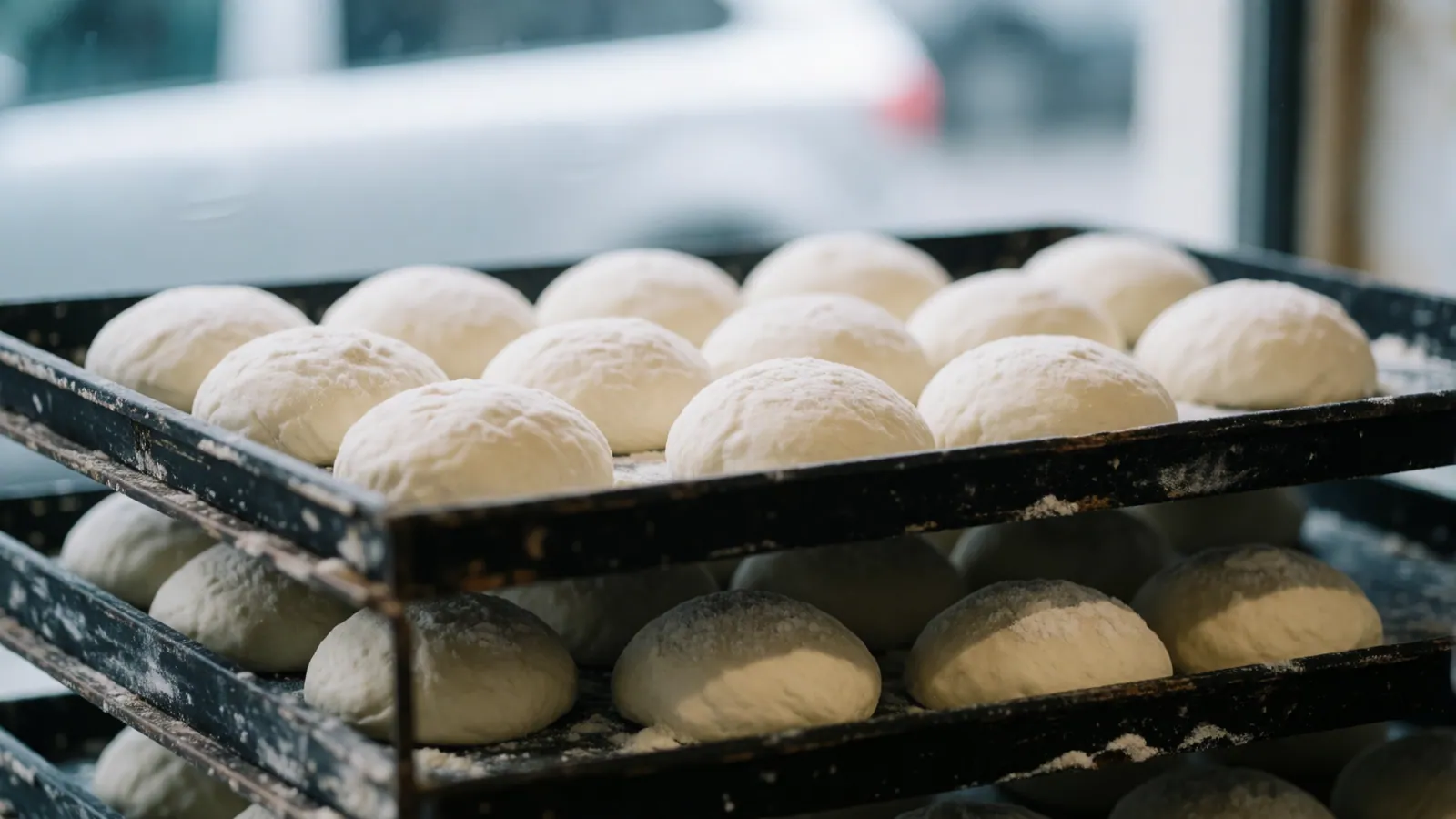
Two days, and the reason it is worth them
The dough
Flour, water, salt, yeast and time. Three of those are cheap and the fourth is the one most shops will not pay for.
What two days actually does
A pizza dough can be made in two hours. Mix it, let it rise somewhere warm, open it, bake it: it will look like a pizza and it will taste of very little. Everything a good crust tastes of — the faint sweetness, the smell of it, the way the rim browns rather than going pale and papery — comes from what happens slowly and does not happen quickly.
At 38°F in the cold room the yeast almost stops. The enzymes in the flour do not: they carry on breaking starch into simple sugars for two days, and those sugars are what caramelise in the oven and give the crust colour and flavour. A fast dough has almost none of them, which is why a two-hour crust comes out pale and has to be sold with something on top of it.
Sal changed to a two-day dough in about 1996. It cost the business money for a year, because it means holding four hundred dough balls in a cold room you have to rent instead of making them the same morning. Then it stopped costing money, for the reason you would hope.
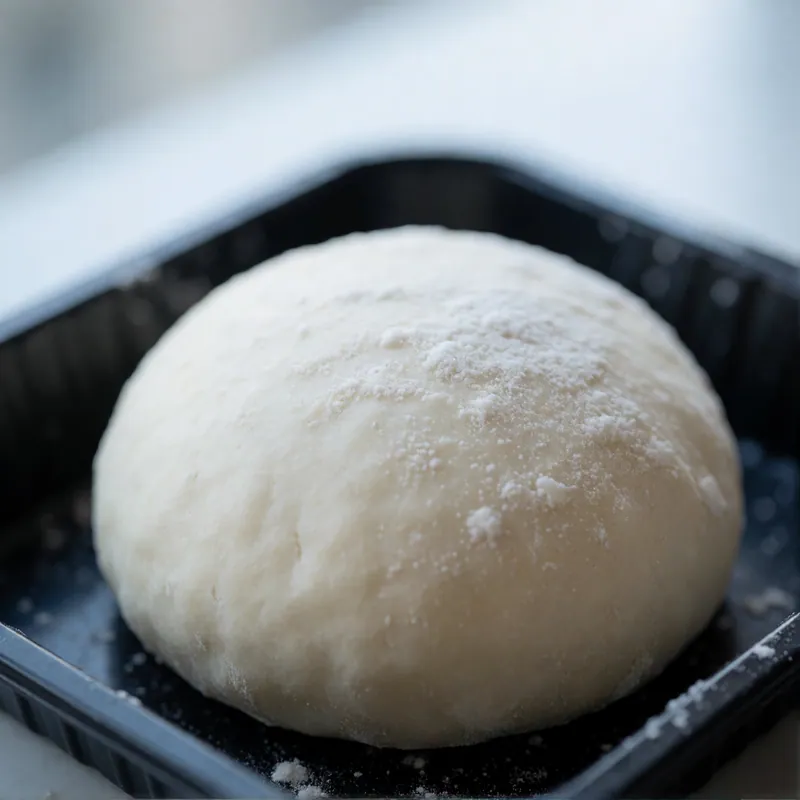
Six in the morning to six the day after tomorrow
What happens to a dough ball here
Mixed, briefly
Flour, water, salt, yeast and a little olive oil, mixed only until it comes together. A dough that will sit for two days does not need to be developed in the mixer; time does that work better than a hook does.
Bulk rest, twenty minutes
On the bench, covered. This is when the flour finishes absorbing the water, and it is why the dough goes from sticky to smooth without anybody touching it.
Divided and balled
By weight, on a scale, because an eighteen-inch pie and a fourteen-inch pie are different weights and guessing shows in the finished rim. Balled tight enough to hold a skin.
Forty-eight hours at 38°F
In trays in the cold room. This is the whole of it. Nothing is done to the dough during this time and nothing needs to be.
Two hours back at room temperature
A cold dough tears when you open it, because cold gluten will not stretch. Elena brings trays out on a rolling schedule through the day so there is always a rack at the right temperature.
Opened by hand
Pressed from the middle out, never touching the outer inch, so all the gas ends up in the rim. There is no rolling pin in this building except the one for the bar pies.
Five doughs, not one
New York round — 62%
The workhorse. Firm enough to open thin and stretchy enough to fold.
Sicilian — 72%
Much wetter, and proofed in the pan it bakes in for a full day.
Grandma — 65%
Pressed straight into the pan and rested an afternoon. No cold ferment at all.
Neapolitan — 60%
A softer flour, split between the bench and the cold room, built to survive ninety seconds at 900°F.
Roman — 80%
Barely handleable, folded rather than kneaded, two days cold. The most difficult thing in the building.
What we will not tell you about it
You will read, on a great many pizzeria websites, that a long-fermented dough is easier to digest, or gentler on the gut, or lower in gluten. We are not going to say any of that. We do not have evidence for it, it edges toward a health claim about a food that is bread and cheese, and we have a whole page about not doing that.
What a forty-eight hour cold ferment does, reliably and observably, is make a crust that tastes better and browns properly. That is the claim, it is a good one, and it is the only one we are making.
Good dinner, not good for you. Pizza is not health food, and we are not going to pretend otherwise. A wholewheat crust is a different flavour and a little more fibre; it is not a diet. A vegetable pizza is still bread, cheese and oil. We publish no calorie counts because we do not weigh portions to a standard that would make the number true, and an invented number is worse than none.
Asked at the counter
Questions about the dough
Why forty-eight hours?
Because that is roughly how long it takes, at 38°F, for the enzymes in flour to break enough starch into sugar to give a crust flavour and colour. At two hours you get bread. At twenty-four you get most of the way. At seventy-two the gluten starts to give out and the dough tears when you open it.
Is a long ferment easier to digest?
People say so and we are not going to make that claim, because we cannot support it. What a long cold ferment reliably does is make a crust taste better and brown properly. That is a good enough reason on its own.
Do you use a sourdough starter?
No. Commercial yeast in a very small quantity, and time. A starter would be a different pizza; this is a New York shop and this is a New York dough.
What flour do you use?
A high-protein bread flour for the round pies, milled from hard winter wheat, and a softer flour blended into the Neapolitan dough. We do not name the mill — we do not name any supplier's brand anywhere on this site.
Why does the dough behave differently in summer?
Because a kitchen at 88°F in August ferments a dough considerably faster than the same kitchen at 62°F in February, and the cold room can only do so much about the hours the dough spends on the bench. Elena adjusts the yeast and the timings by season and by day.
Can I buy dough balls to take home?
Yes, $4 each, subject to what is on the rack. Take it out of the fridge two hours before you want to use it, and open it by hand rather than with a pin.
Twelve to fifteen minutes, and worth the wait
Order a pie
Telephone the shop and we will tell you honestly how long the kitchen is running before you commit to anything. Collection is always quicker than delivery and the pizza is always better for it. If you are ordering for a crowd, the catering page has the trays and the notice we need.